Art-Historical Assessment of Margus Veisveer’s Poetry Poster Series (1987)
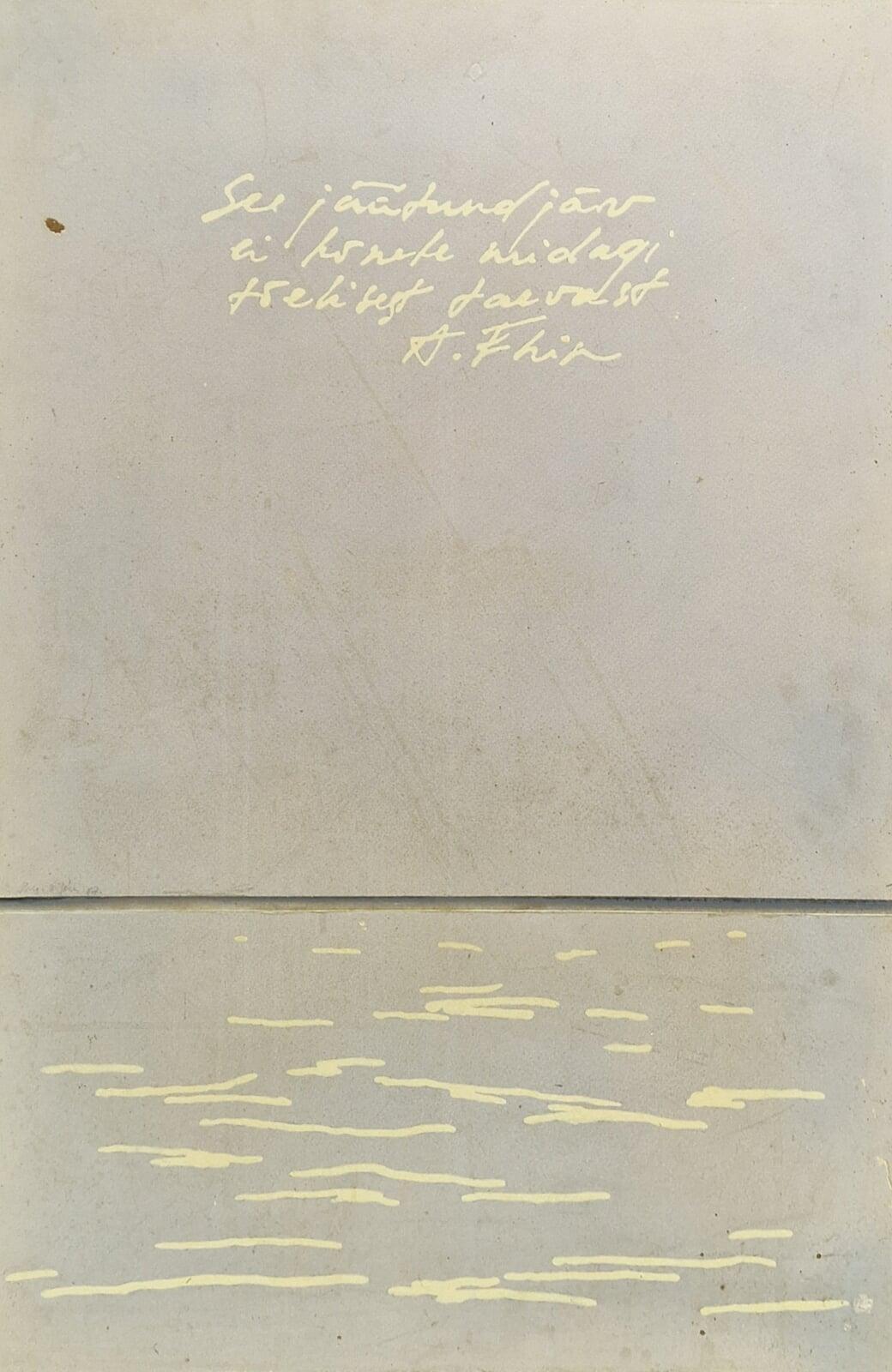
Margus Veisveer’s 1987 poster series created at the Tartu Art School-based on the haiku poetry of Andres Ehin-marks a significant and previously underdocumented turn in the development of Estonian poster art. It stands as one of the earliest known instances in Estonia where poetry appears not as an illustration, caption, or supplementary motif, but as the central visual and conceptual core of the poster itself. In this sense, Veisveer’s work departs clearly from the dominant poster traditions of the era and aligns more closely with contemporary conceptual design practices.
Position Within Estonian Poster Art
During the late 1980s, Estonian poster art was shaped by two main currents:
functional or commissioned posters for cultural and public events, and
artist-driven posters, often linked to exhibitions, concerts, or film.
Although the 1970s–1980s saw important developments in visual poetry and text-based conceptual art (such as works by Raul Meel or, in a literary dimension, Andres Ehin himself), a cohesive series of poetry posters as an autonomous artistic form was absent. Veisveer’s diploma project fills this historical gap.
Connection to Conceptual and Minimalist Traditions
The posters draw directly from the aesthetic logic of haiku: economy of language, sensitivity to space, and intentional restraint. Veisveer translates these principles into a visual structure that blends minimalist design with poetic rhythm.
Characteristic features include:
deliberate use of empty space as a compositional force,
typography that determines the entire visual balance,
a muted and atmospheric color palette that supports the mood of the poem,
an avoidance of illustration in favor of textual presence.
These qualities place Veisveer’s work in dialogue with the Baltic graphic design avant-garde of the late 1980s, though Estonia had seen very few text-centred posters of this nature.
Historical Significance and International Context
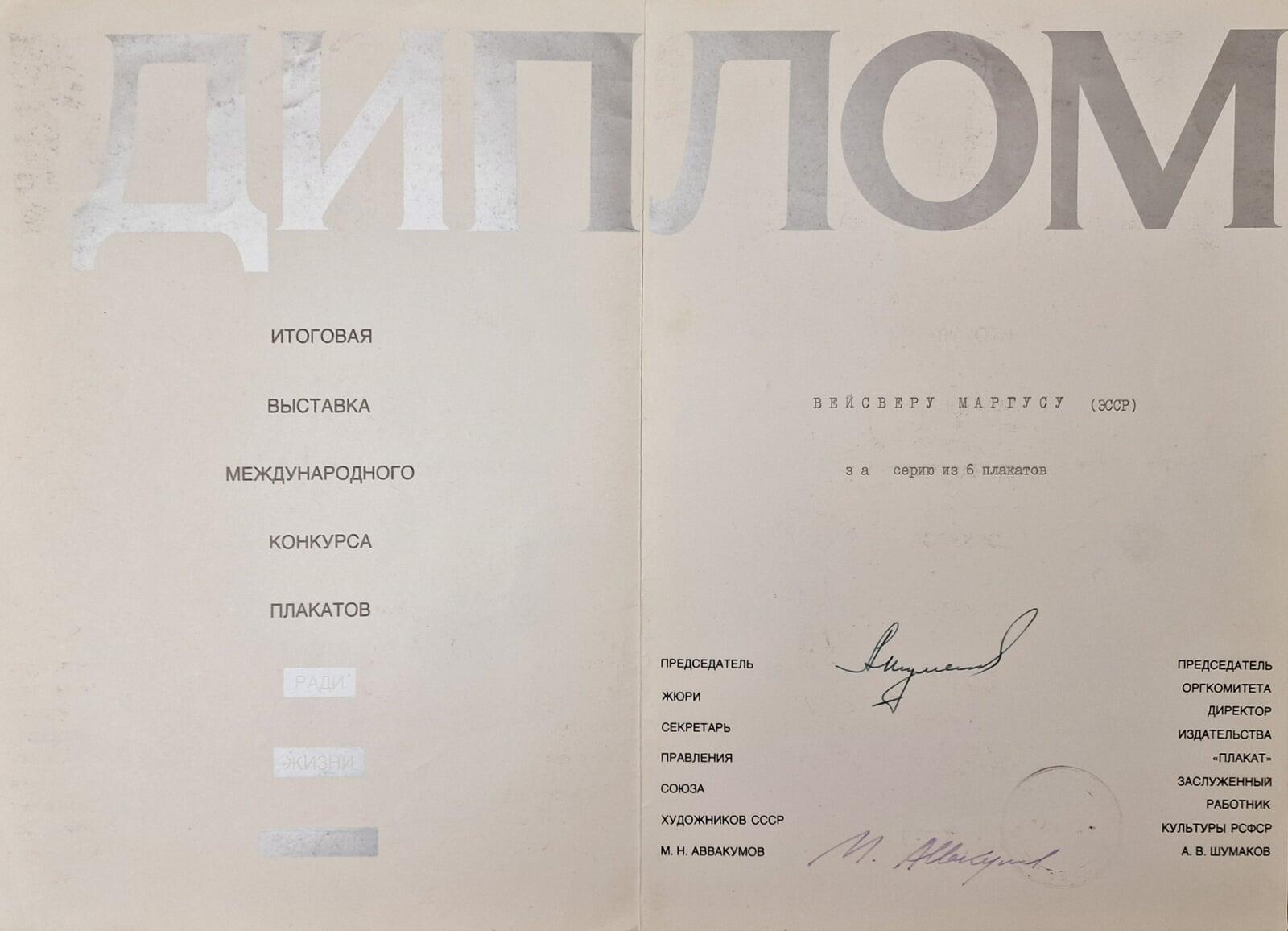
The fact that six posters from the series were selected for an international poster exhibition in Moscow in 1989 highlights both their artistic merit and their conceptual distinctiveness. During the perestroika period, juries increasingly favored experimental, minimalist, and text-driven works-precisely the qualities embodied in this series.
That most posters have not survived, nor were they widely documented, reflects a broader pattern of late-Soviet experimental artworks: they circulated in exhibitions but often fell outside institutional archiving systems.
Veisveer’s 1987 diploma series represents an early and singular example of text-centred authorship in Estonian poster design, preceding several text-driven visual trends that would emerge in the 1990s.
Its significance lies in:
being the earliest known cohesive poetry poster series in Estonia;
merging graphic design and poetry in a formally innovative way;
demonstrating the experimental spirit of the Tartu Art School in the late Soviet period;
contributing to the broader modernization of Estonian visual culture on the eve of political transition.
Had the entire series been preserved, it would likely hold a place among the canonical works of Estonian graphic design from the late 20th century. Even in fragmentary form, it stands out as a historically important and pioneering project.
Posters based on haiku by Andres Ehin, Tartu Art School Diploma Series
Margus Veisveer’s 1987 poster series, created in dialogue with the haiku poetry of Andres Ehin, stands as one of the earliest known examples in Estonia where poetry itself becomes the primary visual subject of the poster. Rather than illustrating the text, Veisveer integrates the poem into the very structure of the image, allowing typography, spacing, and rhythm to carry the expressive weight traditionally assigned to graphics.
Each poster presents a single haiku, suspended within a restrained minimalist composition. The subtle tonal fields, the measured balance of empty space, and the deliberate calm of the design echo the essential qualities of haiku—brevity, clarity, and contemplative stillness. In these works, the poem is not merely placed onto the picture surface; it is the composition.
Created on the eve of major cultural and political transformations in Estonia, the series reflects a moment when graphic design was opening itself to conceptual experimentation. Veisveer’s approach diverges from the dominant poster traditions of the period and aligns instead with emerging text-based visual practices. It is no coincidence that six works from the series were selected for exhibition at the International Poster Exhibition in Moscow in 1989, where their quiet precision and conceptual directness stood out.
Although many of the posters have not survived, the significance of the series is clear: Veisveer’s project represents a pioneering step in Estonian visual culture, expanding the boundaries of what a poster could be. By giving poetry the status of image, he created a body of work that remains both historically singular and artistically resonant.